
Some people choose a profession, while others grow into it.
Andrea Sinopoli belongs to the second category: from a very young age, he spent his days by his father’s side, observing, learning, and breathing in that barn air that for many is hard work but for him has become a calling. Yet, taking up the torch is never an automatic decision. Even when the passion is genuine, there are moments when you pause to ask yourself if it’s really worth it.
“I’ve always been passionate about this job, probably because I grew up doing it alongside my father. But I have to be honest: I’ve wondered more than once if I really wanted to pursue it. Because you have to work on holidays, too, and sometimes that takes its toll.“
A disarming clarity that doesn’t undermine the choice, but makes it stronger. Those who make decisions consciously—rather than out of inertia—are driven by a deeper-rooted motivation.
Five years at an agricultural school provided Andrea with a basic technical vocabulary and a useful theoretical framework. But in this profession, true learning takes place elsewhere: you learn by watching the hands of those who work, you understand by observing how animals react, and you acquire knowledge that cannot be found in books.
“I’ve learned practically everything by watching—first from my father, then from the veterinarian and the other people involved with the farm. And I already know that I’ll never stop learning.”
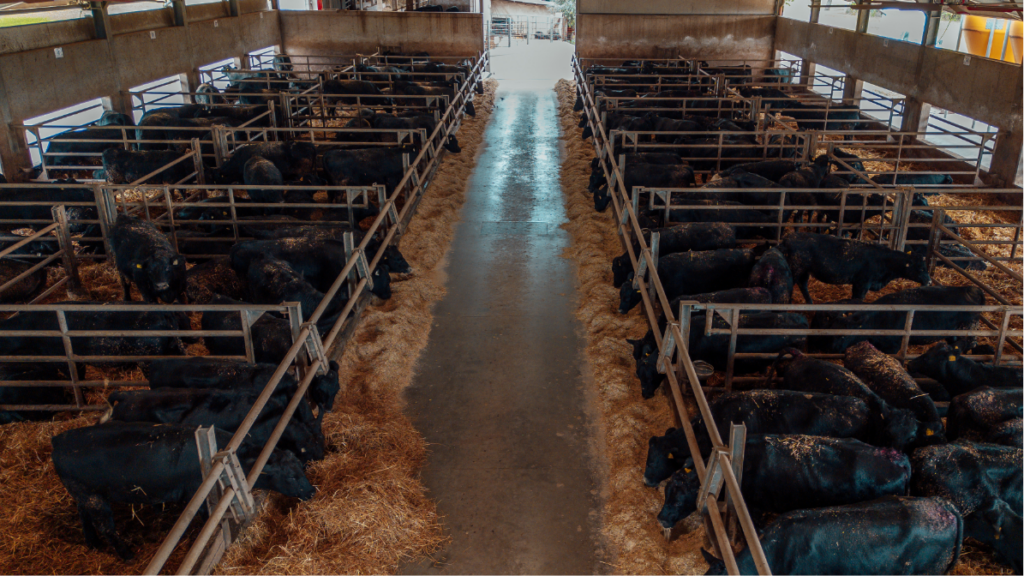
In an ever-evolving industry, this awareness is perhaps the most valuable skill of all. When Andrea formalized his entry into the business by applying for his first young farmer grant, he decided to invest immediately in something tangible: installing fans in the barn. A seemingly simple measure that has produced tangible results. The bedding stays drier, the animals are cleaner, the number of flies has decreased significantly, and—far from a minor point—heat stress has been significantly reduced during the hottest months. In addition, a straw chopper was purchased, which allows for the use of less straw while maintaining superior bedding quality.
Small steps, big differences. Not just compliance with regulations, but investments in the quality of life for animals—and, by extension, for those who raise them.